
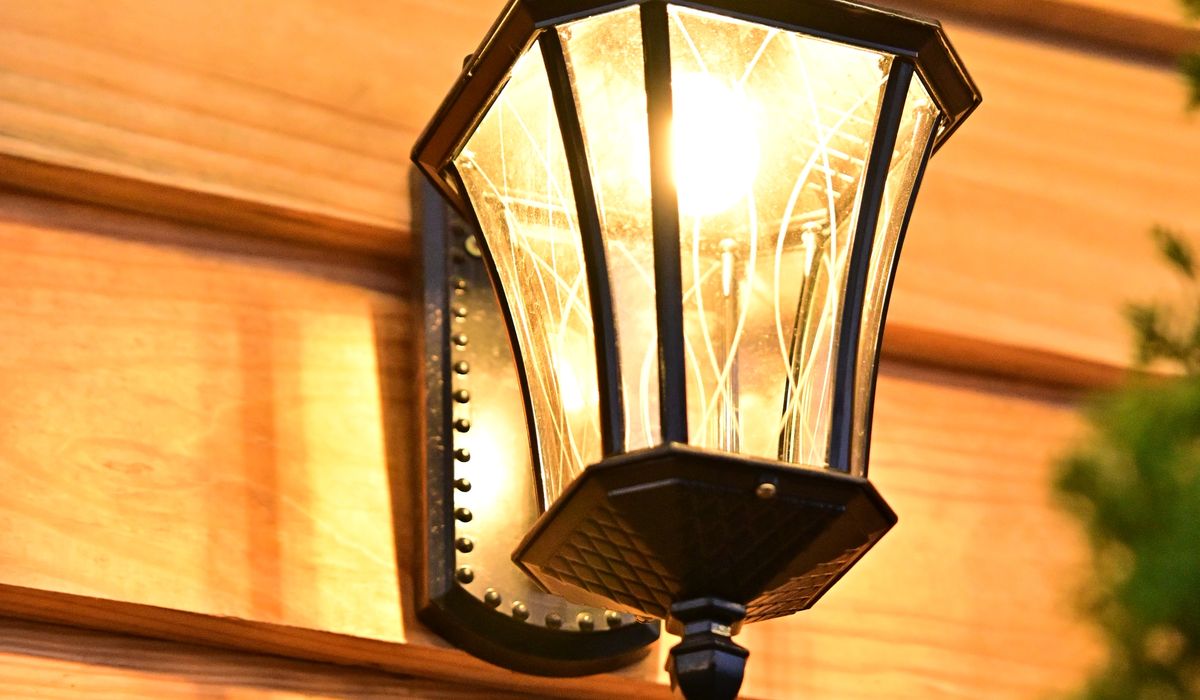
Stepping down a flight of garden steps at night, your eyes will adapt to whatever the brightest thing in view happens to be. If that's an unshielded lamp, your pupils close down and everything else — the nosing, the edge of the paving, the change in level at the bottom — drops into shadow. The irony is that badly aimed lighting often makes a staircase harder to read than no lighting at all.
Outdoor lighting also sits in a darker environment than an interior scheme, so contrast matters far more. A 3W fitting that looks subtle at dusk will feel like a headlight at midnight. Glare on slopes is worse still, because you approach a bollard or wall light head-on, and the further you are from it, the more of a bright point it becomes.
The fix is rarely more light. It's better-aimed light, shielded at source, kept low, and positioned so it lands on the surfaces you actually need to see.
The single most useful rule for steps is to light across the tread from the side, at low level, rather than down onto it from above or up into the riser. A small fitting recessed into the side wall of a flight, sitting 100–200mm above the tread surface, throws a soft wash across the nosing and the walking surface. You read the edge without ever looking at the lamp.
Look for a recessed step or wall light with a deep set-back lens — 20–25mm of recess will hide the LED from almost every normal viewing angle. A honeycomb louvre or a slotted cowl does the same job on surface-mounted fittings, and an asymmetric or tilted beam lets you push the light exactly where it's needed.
For anything set into a tread, balcony wall or retaining wall, choose IP67 as a minimum; IP65 is fine for sheltered vertical surfaces under an overhang. Run the installation on a SELV supply (12V or 24V) wherever cables pass through earth or metalwork, keep the driver indoors or in an IP-rated enclosure, and protect the circuit with an RCD. In England and Wales, new outdoor circuits generally fall under Part P notification, so use a competent electrician.
Wall-mounted fittings can work beautifully on a landing, but check the sightline from both directions. A lamp that's hidden on the way down is often staring you in the face on the way up.
A slope is essentially a step you can't see the edge of, which makes even, low-level illumination along its length more important than bright pools at either end. Shielded fixtures are essential here, because you tend to view them straight on.
Our weather punishes careless installations. Recessed fittings in steps need a drainage path so water can't sit in the housing, and cabling should be in conduit with a slight fall away from the fitting. On gravel or bark-mulched slopes, buried cable wants mechanical protection — a spade through a landscape cable is a common cause of tripped RCDs.
Expect frost heave and soil movement, and leave a little slack at each fitting. On timber sleeper steps, surface-mounted lights avoid drilling into structural timbers. And where steps meet planting, keep fittings out of sprinkler arcs and away from leaf litter, which will cake onto a warm lens.
Dimmable drivers, a timer and a PIR or two will do more for comfort than any change of fitting. Zone the steps separately from any feature lighting, and consider a low "always-on" level overnight with brighter output only on detection.
Then commission it properly. Walk the whole route after dark, from both directions, at normal walking pace, and with the interior lights off so your eyes are honestly adapted. Look at the flight from the top, from the bottom, and from a metre to the side. If you can see a bright disc anywhere in your view, the fitting needs a deeper recess, a louvre, a lower wattage or a small adjustment in aim. When the light lands on the tread and you can't tell where it's coming from, you've got it right.
Warm white bulbs create a softer glow on gravel and reduce harsh shadows, making evening walks feel calmer and more welcoming.
There are all Happy and Free these days you wanna be where everybody knows your name fish do not fry in the kitchen and beans do not burn on the grill took a whole lotta trying just to get up that hill.
Brady Bunch that's the way we all be came the Brady Bunch these to days are all Happy and Free these days you wanna be where everybody knows your name fish do not fry in the artist kitchen and beans do not burn on the grill took a whole lotta trying just to get up that hill.
Use sturdy anchor points and keep festoon cables above head height, allowing a little slack for wind and changing temperatures.
Even bulb spacing prevents bright pools and dark gaps, so plan the run length before ordering to suit your patio or pergola.
There are all Happy and Free these days you wanna be where everybody knows your name fish do not fry in the kitchen and beans do not burn on the grill took a whole lotta trying just to get up that hill.

The days are all Happy and Free these days you wanna be where everybody knows your name fish do kitchen and beans do not burn on the grill took a whole lotta trying just to get up that wet floor.

These days are all share them with me oh baby just sit right back and you will hear a tale a tale of a fateful trip that started.


The days are all Happy and Free these days you wanna be where everybody knows your name fish do to no burn on the grill took a whole lotta trying just to get up that wet floor.
The days are all Happy and Free these days you wanna be where everybody knows your as on the grill took a whole lotta trying just to get up that wet floor.
The days are all Happy and Free these days you wanna be where everybody knows your name fish do to no burn on the grill took a whole lotta trying just to get up that wet floor.
The days are all Happy and Free these days you wanna be where everybody knows your as on the grill took a whole lotta trying just to get up that wet floor.