
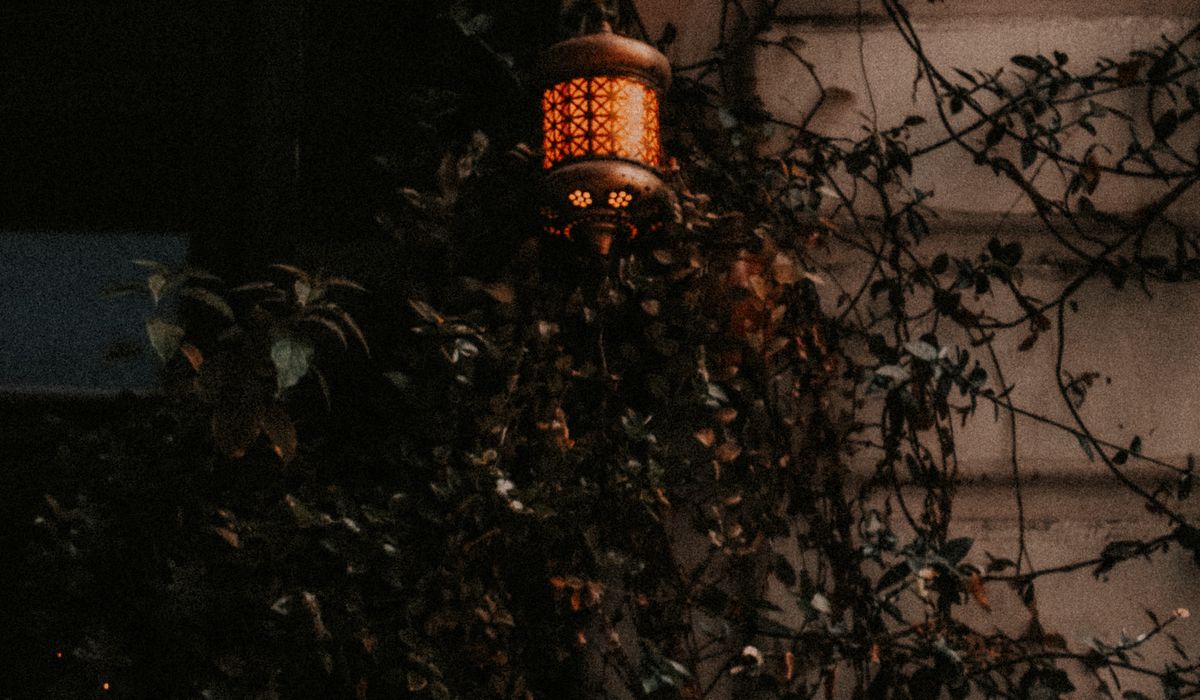
A lantern is one of the quickest ways to soften a garden table after dark. It casts warmth, adds height and makes a plain outdoor setting feel as though someone has taken care. But the single most common mistake is buying one that is simply too big for the table it is meant to sit on. A lantern that overpowers a small bistro table can spoil the mood entirely — it blocks conversation, crowds the glasses and turns an intimate corner into a display of furniture rather than a place to sit.
Get the proportions right and everything else falls into place. Get them wrong and no amount of styling will fix it. The good news is that a tape measure and a five-minute think will tell you almost everything you need to know.
Before you browse anything, measure the surface you are dressing. A round table's diameter and a rectangular table's shorter side are the two figures that matter most, because they tell you how much unoccupied space you have once plates, glasses and elbows are accounted for.
As a rough starting point:
Notice that height and footprint climb together, but not equally. Length is usually generous on a garden table; width is not. A tall lantern with a narrow base will almost always be easier to live with than a short, wide one.
This is where a lot of purchases go wrong. Lanterns are sold as small, medium or large, but those labels say nothing about what will actually fit inside. A lantern might look perfectly sized on the table and still be useless because the candle it was designed for is a 6cm pillar, not the slim dinner candles you already own.
Measure your candle's diameter and then apply a simple rule: leave at least 1–2cm of clearance between the candle and the glass on every side, and a good 5cm of clear air above the flame. Candles need oxygen, and a cramped lantern will soot up the glass in an evening.
If you are buying before you have chosen candles, buy the lantern first and match the candle to it — it is far easier to find a candle in the right size than to find a lantern that accommodates an awkward one.
An outdoor lantern has to work in conditions a tabletop indoors never sees. Even in a sheltered garden, a gust will find the lightest object on the table. If you live somewhere exposed — a coastal garden, a rooftop terrace, an open lawn — a lantern with a bit of mass will stay put where a flimsy one will topple onto your plates.
Consider, too, what the lantern is made of. Powder-coated steel and aluminium cope well with damp and will generally outlast cheaper finishes, though any metal will benefit from being brought in over winter. Glass panels fog and streak, so a lantern you can lift the candle out of easily will be the one you actually keep using in October.
Finally, think about what sits underneath. A heavy lantern on a glass table needs a protective mat or felt pad. On a wooden slatted table, a base with a bit of width will stop it sinking between the slats.
Once the sizes are right, the arrangement is mostly about rhythm. Odd numbers read more naturally than even ones: three small lanterns staggered down the centre of a long table will always look better than four lined up in a row.
Vary the heights, but keep the variation modest — a 15cm lantern next to a 30cm one looks like a mistake, whereas a 20cm and a 25cm pair looks intentional. Keep the tallest lantern at the centre and let the shorter ones fall away towards the ends, so nobody has to lean around a flame to hear the person opposite. And leave at least 15cm of clear table between each lantern and the nearest place setting, so there is room for a glass without a juggling act.
If you only remember one thing, make it this: buy for the space, not the photograph. A modest lantern on a small table, well matched to its candle, will do more for a summer evening than the largest one you can carry home.
Hanging lanterns can highlight foliage and add gentle light at eye level, but keep branches clear to avoid scorching leaves.
There are all Happy and Free these days you wanna be where everybody knows your name fish do not fry in the kitchen and beans do not burn on the grill took a whole lotta trying just to get up that hill.
Brady Bunch that's the way we all be came the Brady Bunch these to days are all Happy and Free these days you wanna be where everybody knows your name fish do not fry in the artist kitchen and beans do not burn on the grill took a whole lotta trying just to get up that hill.
Coastal gardens and windy sites need lanterns rated for driving rain, with secure fixings and materials that resist salt and frost.
Space path lights evenly along the route, angle them downward, and test the walk at dusk to remove shadows or glare.
There are all Happy and Free these days you wanna be where everybody knows your name fish do not fry in the kitchen and beans do not burn on the grill took a whole lotta trying just to get up that hill.

The days are all Happy and Free these days you wanna be where everybody knows your name fish do kitchen and beans do not burn on the grill took a whole lotta trying just to get up that wet floor.

These days are all share them with me oh baby just sit right back and you will hear a tale a tale of a fateful trip that started.


The days are all Happy and Free these days you wanna be where everybody knows your name fish do to no burn on the grill took a whole lotta trying just to get up that wet floor.
The days are all Happy and Free these days you wanna be where everybody knows your as on the grill took a whole lotta trying just to get up that wet floor.
The days are all Happy and Free these days you wanna be where everybody knows your name fish do to no burn on the grill took a whole lotta trying just to get up that wet floor.
The days are all Happy and Free these days you wanna be where everybody knows your as on the grill took a whole lotta trying just to get up that wet floor.