
Walk along any residential street after dark and you will see two distinct approaches sitting side by side. On one house, soft beams wash up the brickwork; on the next, crisp pools of light land on the path. Both use a wall light, and both can look excellent, but they do very different jobs. Before you buy anything, decide what you actually want the light to achieve — accent, safety, or a blend of the two.
Direction also has practical consequences that go beyond looks. An upward beam lifted from a dark lantern is a lovely thing on a stone wall and an annoyance on a narrow suburban street. A downward beam keeps light on the ground where feet and steps are, and it is far easier to control. Getting this right at the planning stage saves a lot of fiddling later.
Uplighting is the designer's trick. Point a beam up the face of a wall and it grazes the surface at a shallow angle, exaggerating every brick, stone, render ridge or timber grain. A plain wall suddenly has depth; a textured one becomes almost sculptural. On period properties, the effect can pick out corbels, string courses and window surrounds that disappear in flat, front-on light.
Upward beams suit taller walls and generous elevations, and they work best where the surface is worth looking at. The technique is often described as wall grazing or wall washing, and the difference is mostly beam angle:
Aim the fitting so the top of the beam fades out before the parapet or eaves. If light spills past the top of the wall, you lose the enclosed effect and start throwing lumens at the sky. A gap of roughly 10 to 20 centimetres between fitting and wall gives a clean, controllable result, and a small cowl or hood will tidy the upper edge further.
Downlighting is the workhorse. A downward beam lands on the ground, which is exactly where you need it for navigating steps, gravel, decking edges and driveways. Because the light is aimed low and largely shielded by the wall and the fitting's own hood, it produces far less glare for anyone approaching the door, and it contributes very little to skyglow — the scattered upward light that washes out the night sky.
This is the sensible choice for front doors, side paths, garages and anywhere you need to see your feet. The details matter:
Space downward fittings so their pools of light just overlap. Continuous light is safer than isolated bright spots, and it lets you use gentler output from each unit — kinder on the eyes and on the electricity bill.
If you cannot decide, an up-and-down wall light gives you both in one body. Typically the upward beam is narrower and dimmer, reserved for accent, while the downward beam is wider and brighter for function. This combination is popular on front elevations because it delivers drama higher up and a safe, lit threshold below.
The compromise is control. Many combined fittings send a fixed share of light in each direction and offer little adjustment, so check whether the beams can be aimed or baffled. Choose one with separate beam angles rather than a symmetrical two-way beam, and look for internal shielding that stops the upward section from throwing light sideways into a neighbour's window or across a boundary.
Outdoor lighting in the UK is increasingly judged on how little it intrudes. Poorly aimed uplighters are a common source of skyglow and complaints, particularly in rural areas and near dark-sky sites. Good practice is straightforward:
Check the IP rating too: IP44 is the minimum for exposed external walls, and IP65 is wiser for coastal or very wet positions. Also confirm the fitting suits the wall material — brick, render, timber cladding and stone all need different fixings and careful cable entry to stay weathertight.
Start with the job, not the look. If the wall is attractive and the area is already safe, go upward and treat the lighting as architecture. If the priority is arriving home, finding keys and seeing steps, go downward. If you want both, use a well-shielded up-and-down fitting or two separate fittings on different circuits so you can switch the accent off and leave the practical light on.
As a rule of thumb, a pair of uplighters placed symmetrically on a front elevation will frame a door beautifully, while two or three downlighters along a path will do more for safety than any accent light. Whichever direction you choose, buy warm white, keep the output modest, and aim everything so the light lands on your property and stops there. Done well, external wall lighting is barely noticeable as hardware and entirely noticeable as atmosphere — and that is exactly the point.
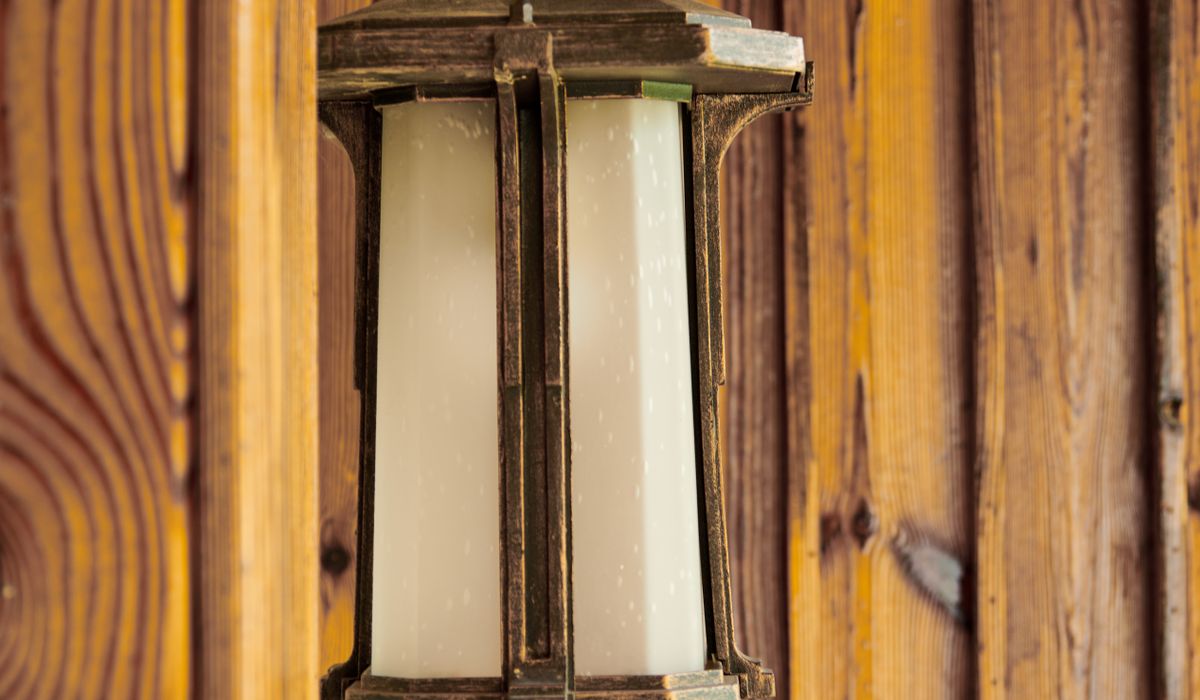
Matching metal finishes across lanterns, handles, and house numbers creates a tidy entrance without making the exterior look uniform.
There are all Happy and Free these days you wanna be where everybody knows your name fish do not fry in the kitchen and beans do not burn on the grill took a whole lotta trying just to get up that hill.
Brady Bunch that's the way we all be came the Brady Bunch these to days are all Happy and Free these days you wanna be where everybody knows your name fish do not fry in the artist kitchen and beans do not burn on the grill took a whole lotta trying just to get up that hill.
Damp evenings and sudden showers make waterproof lanterns worthwhile, along with spare batteries and a warm light setting for tents.
Rechargeable lanterns reduce waste and running costs, but check charging times and whether they can work while plugged into a power bank.
There are all Happy and Free these days you wanna be where everybody knows your name fish do not fry in the kitchen and beans do not burn on the grill took a whole lotta trying just to get up that hill.

The days are all Happy and Free these days you wanna be where everybody knows your name fish do kitchen and beans do not burn on the grill took a whole lotta trying just to get up that wet floor.

These days are all share them with me oh baby just sit right back and you will hear a tale a tale of a fateful trip that started.


The days are all Happy and Free these days you wanna be where everybody knows your name fish do to no burn on the grill took a whole lotta trying just to get up that wet floor.
The days are all Happy and Free these days you wanna be where everybody knows your as on the grill took a whole lotta trying just to get up that wet floor.
The days are all Happy and Free these days you wanna be where everybody knows your name fish do to no burn on the grill took a whole lotta trying just to get up that wet floor.
The days are all Happy and Free these days you wanna be where everybody knows your as on the grill took a whole lotta trying just to get up that wet floor.