
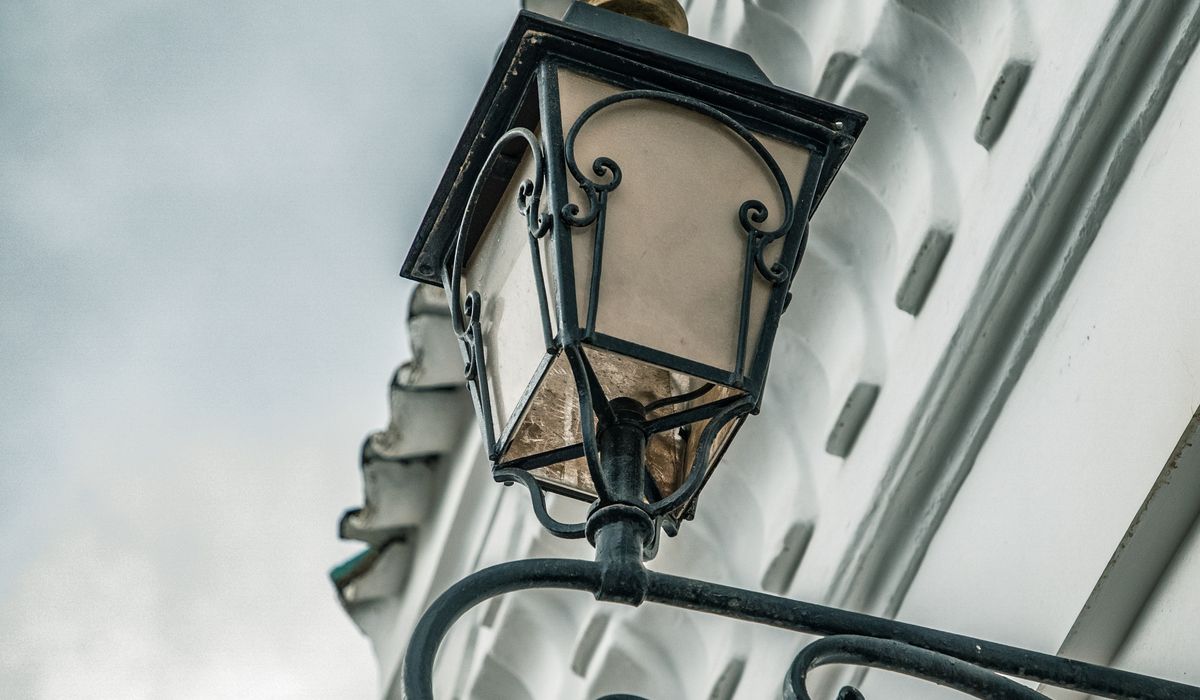
Outdoor lanterns quietly earn their keep from October to March, taking rain, frost, grit and the odd stray football without complaint. By the time the clocks go forward, they have usually accumulated a season's worth of wear that is easy to miss on dark evenings but obvious in bright spring daylight. A couple of hours now, on a dry weekend, will save you the frustration of a lantern that flickers, fills with water or refuses to light on the first warm evening of June.
Work through the checks below in order. Nothing here needs specialist tools, and most of it can be done from a step ladder with a torch, a soft brush and a small spanner.
Before you touch anything, isolate the circuit at the consumer unit and prove it is dead with a voltage tester, or by plugging a socket tester into equipment on the same circuit where that is safe to do. Outdoor lighting often sits on its own breaker, sometimes shared with garden sockets or a pond pump, so label the breaker clearly before it goes back on.
With the power off, remove each lantern's cover or cage and inspect it in daylight. Look for:
Note anything that looks tired. A fitting that has rusted through at the base is usually better replaced than repaired, particularly if it is a sealed unit.
The rubber gasket around the glass and the seal at the cable entry do most of the work keeping a lantern weatherproof. After a winter of freeze-thaw cycles, they harden, shrink and lose their grip. Run a finger around each gasket and check for flat spots, splits or a gritty coating of dried dirt.
Clean the gasket channel with a damp cloth, then apply a thin smear of silicone grease—not petroleum jelly, which degrades many rubbers. If a gasket is cracked or has lost its shape, replace it; generic gasket cord or a spare from the original supplier costs far less than a waterlogged fitting. Check the IP rating stamped on the lantern and treat it as a promise that holds only while the seals are intact. A fitting rated IP44 will happily shrug off splashes, but it will not tolerate a gasket that has perished.
Lanterns are irresistible to insects. A warm housing with a small opening makes a perfect overwintering spot, and you will often find dried ladybird clusters, spider egg sacs and the beginnings of a papery wasp nest tucked behind the reflector.
Avoid pressure washers near lanterns. Water forced past seals does far more damage than the dirt it removes. If a nest has been built against wiring, brush it away gently and inspect the insulation underneath for any sign of nibbling or staining.
Vibration from wind, plus the seasonal movement of timber and masonry, loosens things over time. Go around each lantern and check the screws holding the glass frame, the terminal cover and the bracket to the wall or post. Tighten them firmly but not brutally—over-tightening cracks glass and strips threads in cast aluminium.
Pay particular attention to:
Where a fixing has failed, drill fresh holes rather than reusing a loose one, and seal the old holes against damp. For low-voltage systems, check that transformers are mounted vertically and off the ground, and that every cable joint sits inside an enclosure rated for outdoor use.
Once everything is clean, dry and secure, restore the power and test each lantern individually rather than trusting a single switch. Work around the circuit and confirm that every fitting illuminates, that dimming or colour-changing functions respond, and that sensors behave sensibly.
Finally, stand back at dusk and look at the garden as a whole. Replace any lamp that has shifted in colour temperature so the scheme reads consistently, and angle adjustable spots away from neighbouring windows. A little attention now means your lanterns will simply work, quietly and reliably, through all the long evenings ahead.
Cracked seals let moisture into fittings, so replace gaskets when you spot condensation and apply a little silicone grease.
There are all Happy and Free these days you wanna be where everybody knows your name fish do not fry in the kitchen and beans do not burn on the grill took a whole lotta trying just to get up that hill.
Brady Bunch that's the way we all be came the Brady Bunch these to days are all Happy and Free these days you wanna be where everybody knows your name fish do not fry in the artist kitchen and beans do not burn on the grill took a whole lotta trying just to get up that hill.
Remove glass panels gently, wash with mild soapy water, and dry thoroughly before reassembly to prevent water marks and rust.
A lantern that overpowers a small table can spoil the mood, so measure your space and consider candle width before buying.
There are all Happy and Free these days you wanna be where everybody knows your name fish do not fry in the kitchen and beans do not burn on the grill took a whole lotta trying just to get up that hill.

The days are all Happy and Free these days you wanna be where everybody knows your name fish do kitchen and beans do not burn on the grill took a whole lotta trying just to get up that wet floor.

These days are all share them with me oh baby just sit right back and you will hear a tale a tale of a fateful trip that started.


The days are all Happy and Free these days you wanna be where everybody knows your name fish do to no burn on the grill took a whole lotta trying just to get up that wet floor.
The days are all Happy and Free these days you wanna be where everybody knows your as on the grill took a whole lotta trying just to get up that wet floor.
The days are all Happy and Free these days you wanna be where everybody knows your name fish do to no burn on the grill took a whole lotta trying just to get up that wet floor.
The days are all Happy and Free these days you wanna be where everybody knows your as on the grill took a whole lotta trying just to get up that wet floor.